
Restless Writing
How that restless feeling might just be a part of your artistic growth

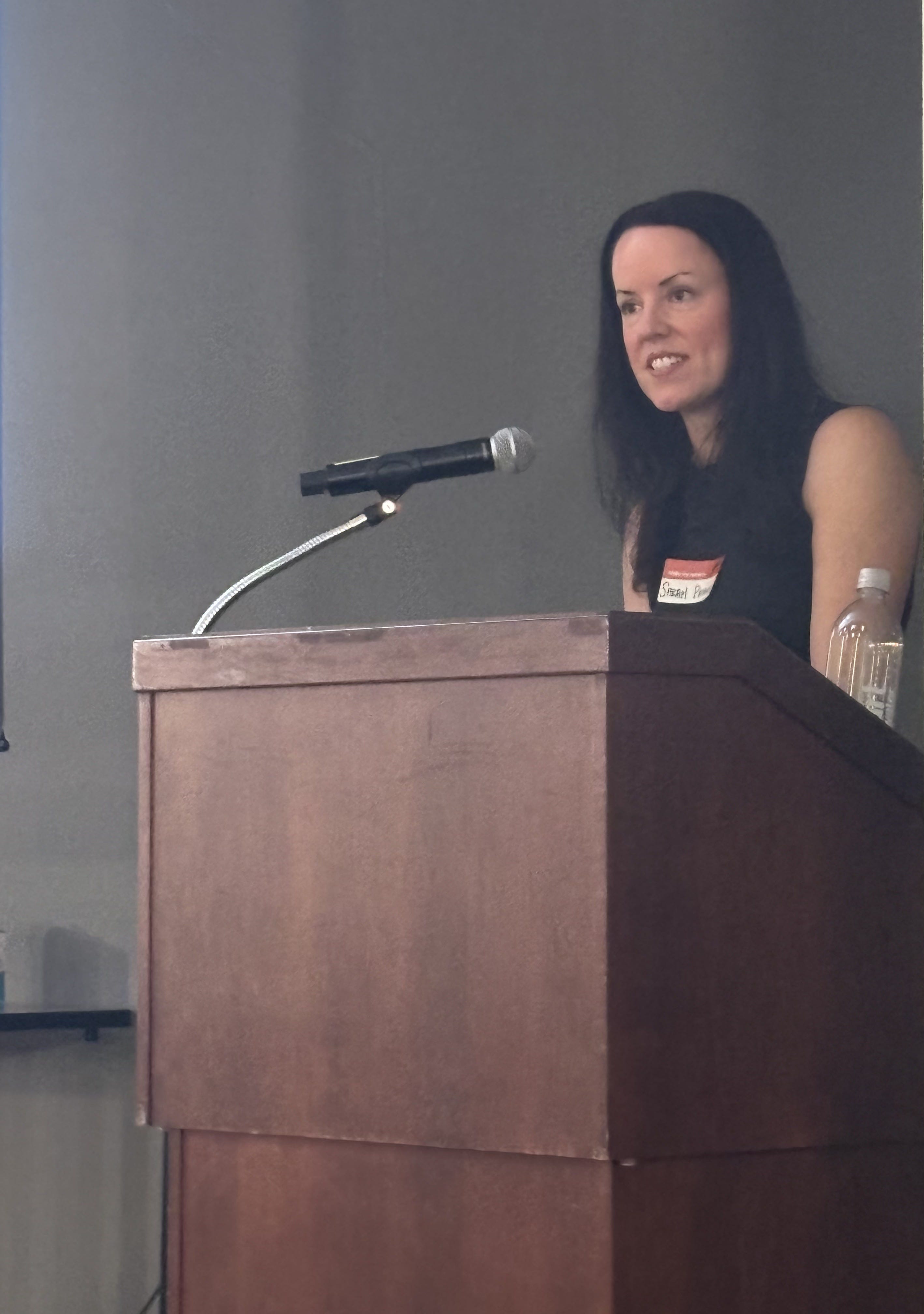
At the opening of the History Through Fiction writers’ conference I attended in March at Endicott College, bestselling author Sarah Penner (The Lost Apothecary, The London Séance Society, and The Amalfi Curse) told a roomful of writers that her road to publishing began with something she called “creative discontent.”
She found herself struck by a powerful need for an outlet other than her finance job. She tried knitting and cooking, but “something wasn’t cutting it.” She took an online writing course and began waking at an ungodly hour every morning to write before going to work. This drive and dedication led to The Lost Apothecary, her debut novel, which hit #7 on the New York Times bestsellers list and her subsequent bestsellers.
But to me, her talk became even more interesting when she said that after she hands in her latest, she won’t write another book in her dual timeline, slightly mystical, historical genre—at least not right away – again because of “creative discontent.”
Some experts define creative discontent as a restlessness or unease; others as a necessary push to combat complacency. I had never heard the term before Penner’s opening remarks, but I knew exactly what she was talking about.
After writing four murder mysteries published in the early 2000s, I knew I couldn’t write another one, even though I didn’t have the name for the feeling. All I knew was that even though I could write mysteries, now I wanted to find a “story that needed to be told.” A story I felt was meaningful to me, and that I had the best skills to execute.
Creative discontent led me to write a historical true crime book, The Combat Zone: Murder, Race and Boston’s Struggle for Justice, (UMass Press 2021), about a Harvard football player stabbed to death in the city’s old red light district in 1976—at the height of the city’s racial tensions—and the impact the two subsequent murder trials had on improving criminal justice in Massachusetts..
I felt my background in both journalism (a love of research and an ability to hunt down sources) and suspenseful crime writing made me just the right match to tell the story of The Combat Zone. Loving history and growing up working in my father’s law office were bonuses.
My creative discontent with writing mysteries also made me buckle down and finish a historical novel I’d been researching since I began sailing in my early twenties. It’s about the New England women who went on global whaling voyages with their husbands in the 19th century. These women, who were willing to live as the sole woman aboard a ship of thirty-five men and brave storms for love and adventure, have always fascinated me.
The throughline in both books was a mix of history and suspense in a story I felt was important to tell. But if you are keeping track, that’s technically TWO genre changes.
This is not exactly what you are supposed to do these days as a writer. You’re supposed to stay “on brand” by writing the same kind of book over and over, but my creative discontent wouldn’t let me do that.
But then, I’ve never wanted to be a brand. I’ve only ever wanted to be a writer.
How about you? Have you experienced a “creative discontent” that led you to a more satisfying project? Or maybe a misadventure? (Jury is out on my career.) I’d love to hear your story in the comments.
so great to have a name for what drove me into museum exhibits & biography!! Brilliant essay
So happy to have a name for: “I’m done writing about World War 2.”