
Creative thinking lives in the kitchen: Let’s go find it
A guest post from a Substack we highly recommend

Welcome back after our holiday break. We’re opening 2026 with a terrific thought piece from Anne Manning, creator of the Substack Trusted Tables. Anne is a seasonal Vineyard resident, an adventurous world-traveling food writer, and teaches creative thinking at Harvard.
Enjoy!
Brenda, Tracey, Kate and Jan
Creative thinking is one of my things. I struggled through a late-in-life masters program to learn about it. I teach it at a university. This year, 2026, I want to explore how creative thinking shows up at restaurants and in recipes and what happens as a result…which is generally a lot of deliciousness.
What is creative thinking?
Creative thinking shows up when someone says, This is how I see the world—this is how it looks and tastes and smells. For me, creative thinking is the process of coming up with something new and worthwhile. Trying to please all people inevitably leads to blandness. Think:
Big hotel conference food—chicken breast, wilted green beans, absence of taste.
Iceberg lettuce—all crunch, no nutrients, no soul.
The Cheesecake Factory—200+ menu items, multiple cuisines, no personality.
When chefs, whether they be home cooks or restauranteurs, have a unique point of view, it comes through in the food and the table and the total experience of the place. In essence they are bringing their unique life story, their interests and their passions to life; they are telling their story with foods and flavors, table settings, and their approach to hospitality. A great Vineyard-based example: Black Joy.
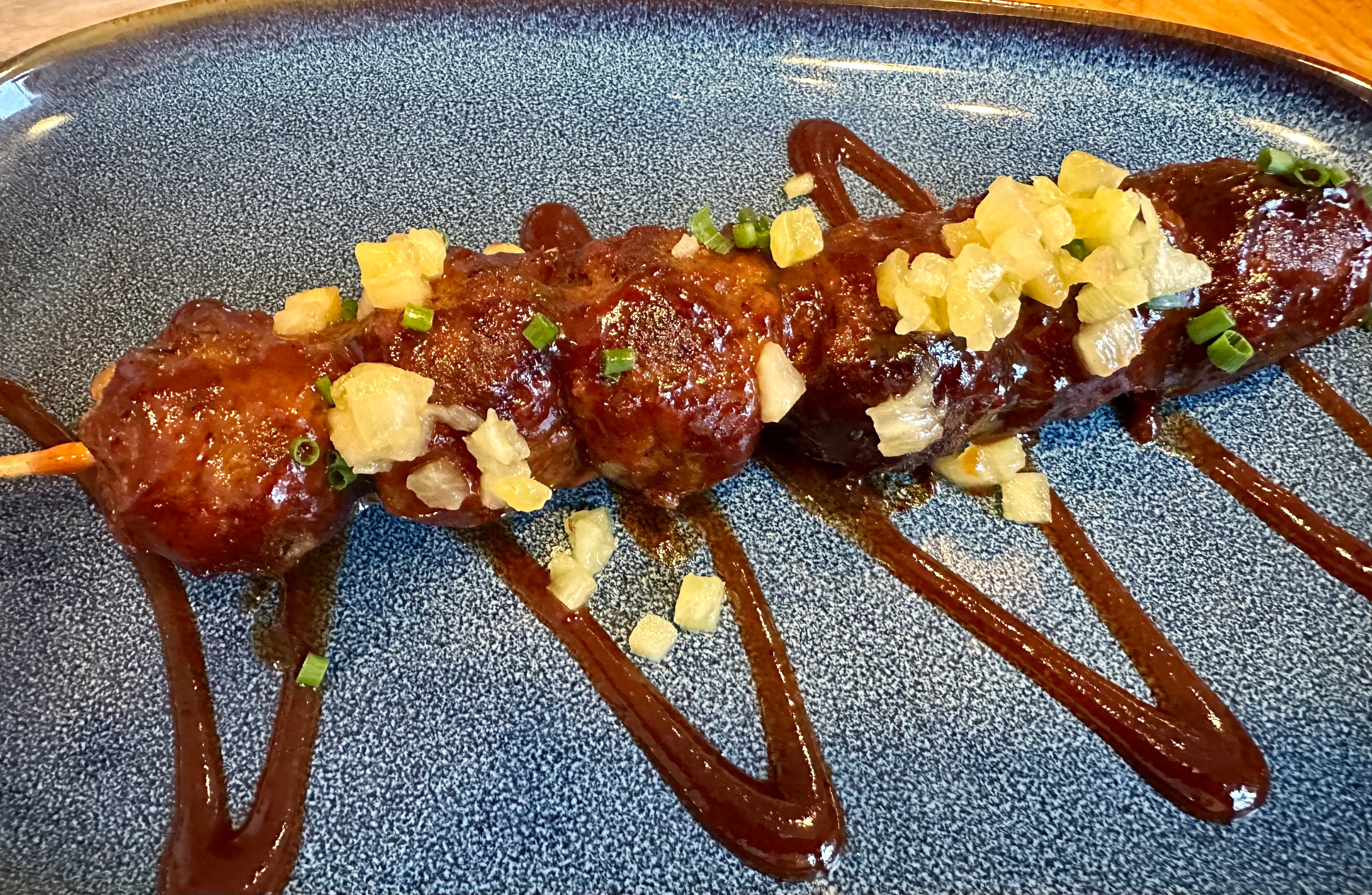
Constraints are a secret ingredient.
Constraints – like time, money, resources – are ever present, a virtual fact of life. Creative thinking thrives with constraints. Part of bringing something new and meaningful into the world is overcoming obstacles.
In the world of food, it means figuring out what to do when fresh vegetables are out of season, or turning out meals from ridiculously tiny spaces, or overcoming the boredom of producing the same thing night after night.
Constraints focus the mind; they demand choice and experimentation and commitment. Mo’s, at the PA Club on the Vineyard epitomizes this.
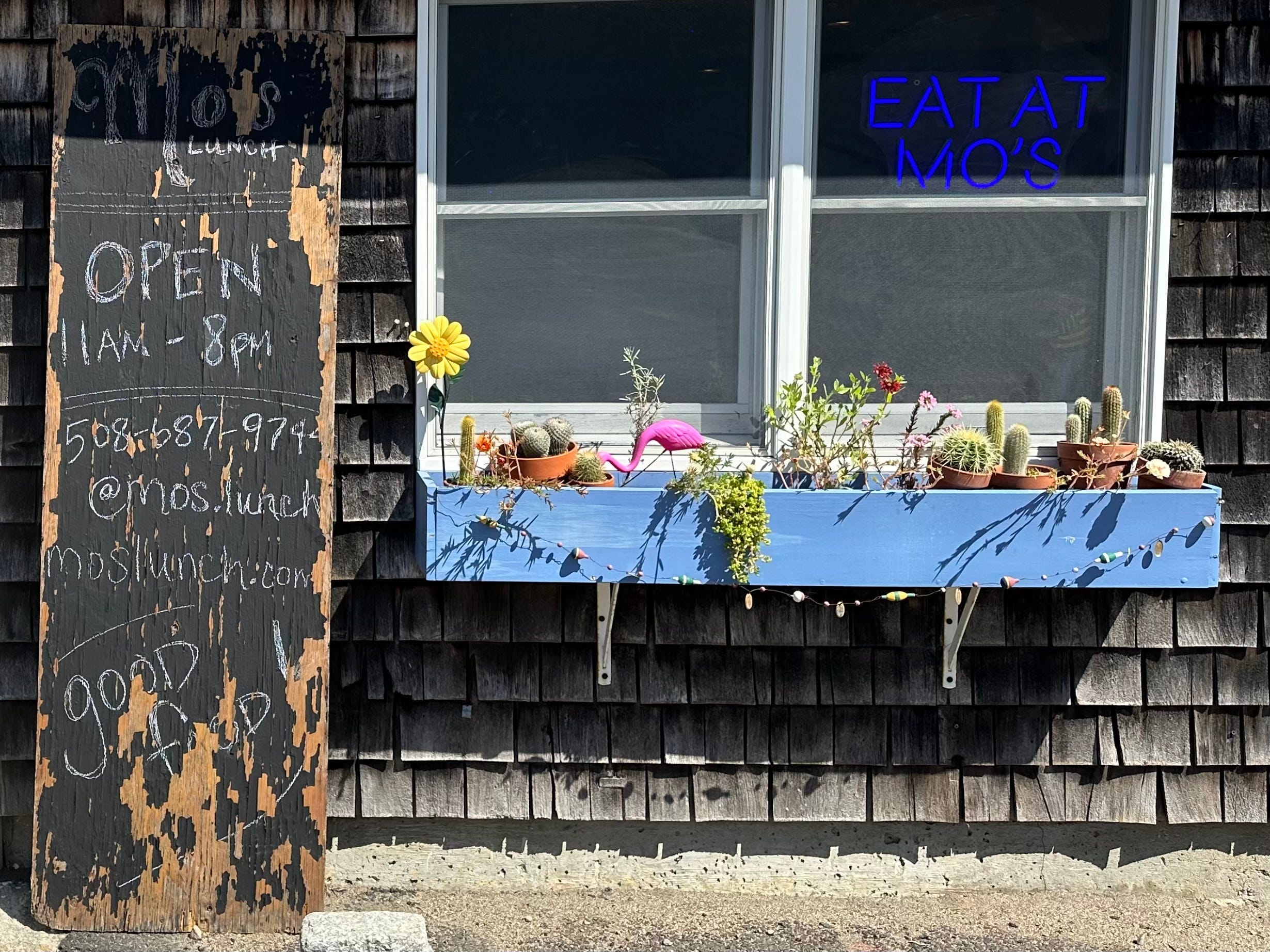
The plate is a prototype.
Innovation involves prototyping—creating a fast version of a new product or service, in order to test it out and refine it. In kitchens, a plate is always a prototype—create a recipe, make it, put it on a plate, and see how people respond. Tweak the recipe based on people’s response. The essence of prototyping.
Chefs prototype daily—during prep, during family meal, during service itself. A dish that doesn’t speak gets pulled. A dish that surprises stays.
Creative thinking isn’t about polish. It’s about responsiveness. Like at Homeport, on the Vineyard, where the new owners are constantly refining their menu to find their way, and a new point of view, at a long- venerated restaurant.


I want to leave you with this clip of Sydney from the The Bear, one of my fave TV shows. Ever.
Sydney is the up-and-coming sous chef on The Bear. In a famous episode, she cooks for one of her co-worker who’s tired and stressed, at the end of her rope and starved. We watch Sydney prepare this omelette—with generosity (another dimension of creativity) and determination and skill and, of course, a brilliant pop of something new.
When I rewatched this episode, I really wanted to make the omelette with Sydney’s special point of view – the way she scrambles the eggs, the care with which she cooks the eggs, and most of all – the magic of a surprise at the end. It’s amazing to me recipe developers haven’t published the recipe anywhere – and no restauranteur has put it on the menu. Take a look and enjoy this iconic scene:
Will you share creative food finds you have experienced lately?
 |
|
I loved that episode of The Bear, went out and bought scallions and potato chips and did my best to copy the omelette. I am highly suggestible when it comes to food, but I never stick to the recipe exactly (unless its a bread recipe or something else that could fail utterly). I always think of the recipe as a guideline. Or sometimes decide what I want to try and then put the ingredients I want to use in a google search and see if anyone else has ever done it.
Loved this POV, Anne!