
Workarounds
For when you can't do something the easy way

Years ago, I had a small writers' group that met weekly and critiqued each other’s work. One writer was incredibly tactile and could make you feel the floor beneath his character’s feet. Another writer could make you taste the food her character was serving in medieval France. Another was so visual you could see the details of the painting emerge as the protagonist was painting. I was the auditory one who could hear dialogue and other sounds that should be in a scene. All of us had strengths. All of us had weaknesses. We had to find workarounds.
I think that’s probably true in all arts. Songwriters who sing with a limited range write great songs in that limited range. I have a Vineyard friend who is a successful artist. He developed a tremor and built himself a wooden brace to support his painting hand.
My weakness was physics. I couldn’t convincingly move my characters through space.
When I was tested in fourth grade, the results showed I was at a second-grade level in spatial relations, and I’m pretty sure that hasn’t improved since then. I have been on the Martha’s Vineyard almost thirty years and still need GPS to find anything on State Road. It’s like I only imprint closeups, no distance shots. In writing my murder mysteries and true crime—where there is always a chase or action scene—I had to come up with a workaround.
In my murder mystery, A Confidential Source, set in Rhode Island, I wanted to have a chase scene at Waterfire, the performance art event in Providence that features a string of brazier fires illuminating the downtown rivers, accompanied by beautiful and sometimes haunting music.
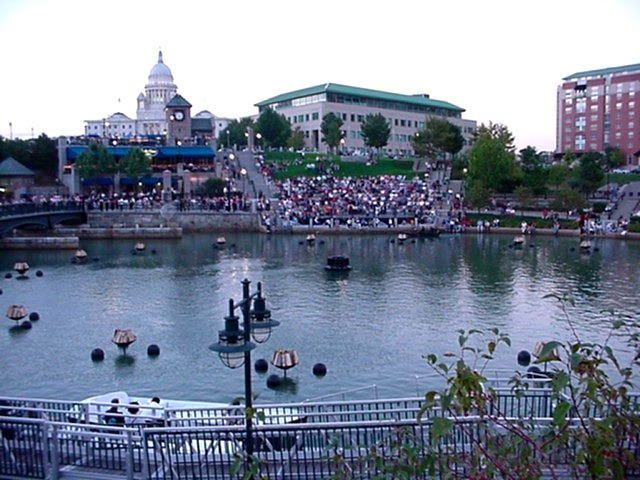
It’s a fabulous summer event that regularly attracts huge crowds. I wanted my protagonist reporter to realize she was being followed and use the crowd as a defense. I had to figure out where she might snake around the crowd, use the footbridges to advantage, change direction and finally exit off the riverwalk to escape her pursuers
I had already attended at least two Waterfires, but I went back with my notebook and camera and took a lot of detailed notes and photos. This helped me with atmospheric details but not with how to move my protagonist through the space.
At the next Waterfire, I recorded video instead. Of course, I was no cinematographer, but I was shocked at how useless my recordings were. Out of desperation, I returned to the riverwalk in daylight when there was no performance. With a pen, sketch pad, and a measuring tape. I walked the riverway and drew a rough map that estimated the distance between tunnels, bridges and possible exits.
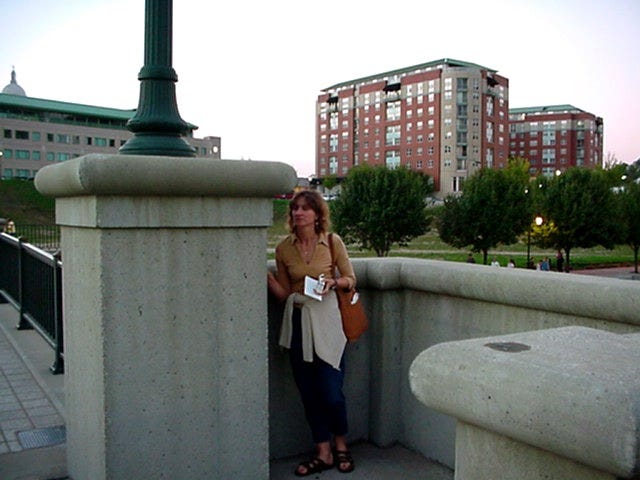
It was a laughable map, readable only by me, but it allowed me to write a convincing and suspenseful action scene.
Since then, I’ve relied on this method for all kinds of scene setting. For my nonfiction book, The Combat Zone, even though I had court transcripts that detailed the exact choreography of the fights that led to the murder, none of it computed until I walked the old red-light district myself and sketched it into my brain.
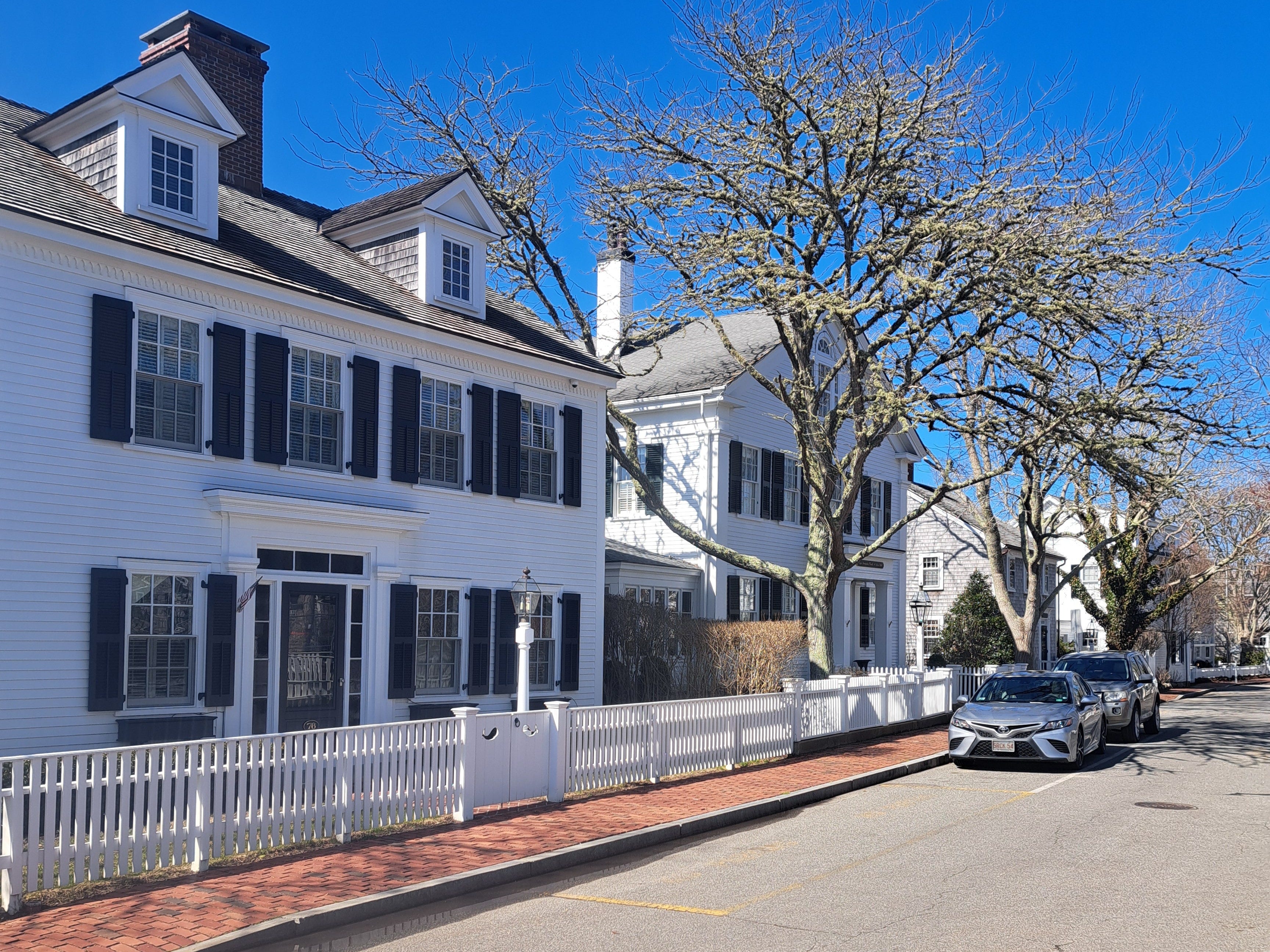
In my current historical novel, several chapters are set in 1860 Edgartown. I began by looking at descriptions of the 19th-century town in the Martha’s Vineyard Museum library. Next, I walked the downtown with a copy of the book Walking Tour of Historic Edgartown
Still, the scenes didn’t come alive until I hand-drew my own map of 1860 South Water Street and used it to decide exactly where my protagonist and her husband strolled, what they could see in the harbor, and where they stopped to fantasize about buying a house fit for a whaling captain.
Perhaps the oddest part of all this is that the most frequent compliments I get on fictional works are on my scene setting; people have even said my settings “become a character.” So maybe creativity isn’t about our inborn talents. Maybe it’s about the ways we compensate for our limitations.
I really like this. I felt like I was in the room with you and the other writers, each with their particular gifts. It made me think about getting back to my writing group.
Interesting that a drawing a map by hand is what works to let your imagination move the characters around in a scene. I’m often intentionally blurring or blending the specifics of a place on the Island to make it unfindable in real life! My struggles are different - plot and character!